


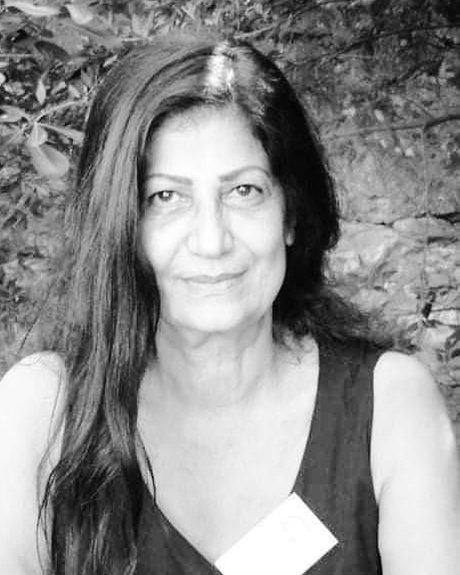


Hala Mohammad
Eng
International Jury
Poet and filmmaker · Syria
BIOGRAPHY :
Originally from Latakia, on the Syrian coast, Hala Mohammad studied cinema at Université Paris 8 Vincennes–Saint-Denis, under leading figures of the French New Wave and critics from the renowned film journal Cahiers du cinéma.
She worked in Syrian cinema as an assistant director alongside Abdellatif Abdelhamid and as a costume designer on The Night by Mohammad Malas, The Box of Life by Oussama Mohammad, and Under the Ceiling by Nidal Al-Dibs.
In 1988, she directed Kan ya ma kan, a film exploring the Arab presence at the Cannes Film Festival, featuring Egyptian film critic Samir Farid.
Her documentaries include Journey into Memory, A Piece of Candy, and When Qassioun Grows Weary. Exploring freedom and creativity, these films draw on the experiences of Syrian artists and writers imprisoned under the rule of the two Assads. When Qassioun Grows Weary was filmed with Syrian poet Mohammad Al-Maghout nine months before his death. She has also made films about resistance literature, including Kam lana.
Her films have screened at international festivals and cultural events, including the Syrian Film Festival at New York’s Lincoln Center, events in Berlin, Stockholm, and Paris, and the Arab Cinema Biennial at the Institut du monde arabe in Paris. She has also served on the jury of the International History Film Festival in Pessac, France, where she has been a regular guest presenting her work.
She has published nine poetry collections in Arabic and three in French with Paris-based publisher Éditions Bruno Doucey, translated by Antoine Jockey: Prête-moi une fenêtre, Les papillons se sont envolés avant nous, and, most recently, Une rose sur la photo de famille.
Based in France since late 2011, she has participated in international poetry festivals and co-founded a House of Poetry in Montreuil with a group of women poets. She also founded the Syrian Film Club in Paris during the period 2014–2018.
Fr
Jury International
Poétesse et cinéaste · Syrie
BIOGRAPHIE :
Originaire de Lattaquié, sur la côte syrienne, Hala Mohammad a étudié le cinéma à l’Université Paris 8 Vincennes–Saint-Denis, auprès de figures de la Nouvelle Vague française et de critiques de la célèbre revue Cahiers du cinéma.
Elle a travaillé dans le cinéma syrien comme assistante à la réalisation auprès d’Abdellatif Abdelhamid et comme créatrice de costumes pour La Nuit de Mohammad Malas, La Boîte de la vie d’Oussama Mohammad et Sous le plafond de Nidal Al-Dibs.
En 1988, elle réalise Kan ya ma kan, un film consacré à la présence arabe au Festival de Cannes, avec la participation du critique de cinéma égyptien Samir Farid.
Elle réalise plusieurs documentaires, parmi lesquels Voyage dans la mémoire, Un morceau de gâteau et Si le mont Qassioun se fatigue. Consacrés à la liberté et à la création, ces films donnent la parole à des artistes et à des écrivaines et écrivains syriens emprisonnés sous les régimes des deux Assad. Si le mont Qassioun se fatigue est tourné avec le poète syrien Mohammad Al-Maghout, neuf mois avant sa disparition. Elle réalise également des films sur la littérature de résistance, dont Kam lana.
Ses films ont été présentés lors de festivals et de manifestations internationales, notamment au Festival du cinéma syrien au Lincoln Center de New York, à Berlin, Stockholm et Paris, ainsi qu’à la Biennale des cinémas arabes de l’Institut du monde arabe. Elle a également été membre du jury du Festival international du film d’histoire de Pessac, en France, qui l’a accueillie à plusieurs reprises pour présenter ses œuvres.
Elle a publié neuf recueils de poésie en arabe et trois en français aux éditions Bruno Doucey, à Paris, traduits par Antoine Jockey : Prête-moi une fenêtre, Les papillons se sont envolés avant nous et, plus récemment, Une rose sur la photo de famille.
Installée en France depuis la fin de l’année 2011, elle participe à des festivals internationaux de poésie et a cofondé, avec un groupe de poétesses, la Maison de la poésie à Montreuil. Elle a également fondé le ciné-club syrien de Paris durant la période 2014–2018.
Ar
لجنة التحكيم الدولية
شاعرة وسينمائية · سوريا
السيرة الذاتية :
وُلدت هالا محمد في مدينة اللاذقية على الساحل السوري، ودرست السينما في جامعة باريس الثامنة «فانسين–سان دوني»، على يد نخبة من أساتذة سينما الموجة الجديدة الفرنسية ونقّاد مجلة «دفاتر السينما» الفرنسية الشهيرة.
عملت في السينما السورية مخرجةً مساعدةً مع المخرج عبد اللطيف عبد الحميد، ومصمّمة أزياء في أفلام «الليل» لمحمد ملص، و«صندوق الدنيا» لأسامة محمد، و«تحت السقف» لنضال الدبس.
في عام 1988، أخرجت فيلم «كان يا ما كان» عن الحضور العربي في مهرجان كان السينمائي، واستضافت فيه الناقد السينمائي المصري سمير فريد.
أخرجت أفلامًا وثائقية، منها «رحلة إلى الذاكرة» و«قطعة الحلوى» و«إذا تعب قاسيون»، تناولت الحرية والإبداع من خلال تجارب فنانين وكتّاب وكاتبات سوريين تعرّضوا للاعتقال في ظل حكم الأسدين. وصوّرت فيلم «إذا تعب قاسيون» مع الشاعر السوري محمد الماغوط قبل رحيله بتسعة أشهر. كما أنجزت أفلامًا عن أدب المقاومة، منها «كم لنا».
شاركت بأفلامها في مهرجانات وتظاهرات سينمائية دولية، من بينها مهرجان السينما السورية في مركز لينكولن بنيويورك، وتظاهرات في برلين وستوكهولم وباريس، وبينالي السينما العربية في معهد العالم العربي بباريس. كما شاركت في لجنة تحكيم المهرجان الدولي للفيلم التاريخي في بيساك بفرنسا، الذي استضافها مرارًا لعرض أفلامها.
صدر لها تسعة دواوين شعرية باللغة العربية، وثلاثة دواوين باللغة الفرنسية عن دار «برونو دوسي» في باريس، بترجمة أنطوان جوكي: «أعرني نافذة» (Prête-moi une fenêtre)، و«الفراشات طارت قبلنا» (Les papillons se sont envolés avant nous)، وأحدثها «وردة على الصورة العائلية» (Une rose sur la photo de famille).
تقيم في فرنسا منذ نهاية عام 2011، وشاركت في مهرجانات شعرية دولية، وأسّست مع مجموعة من الشاعرات بيت الشعر في مونتروي بفرنسا. كما أسّست النادي السينمائي السوري في باريس خلال الفترة الممتدة بين عامَي 2014 و2018.