




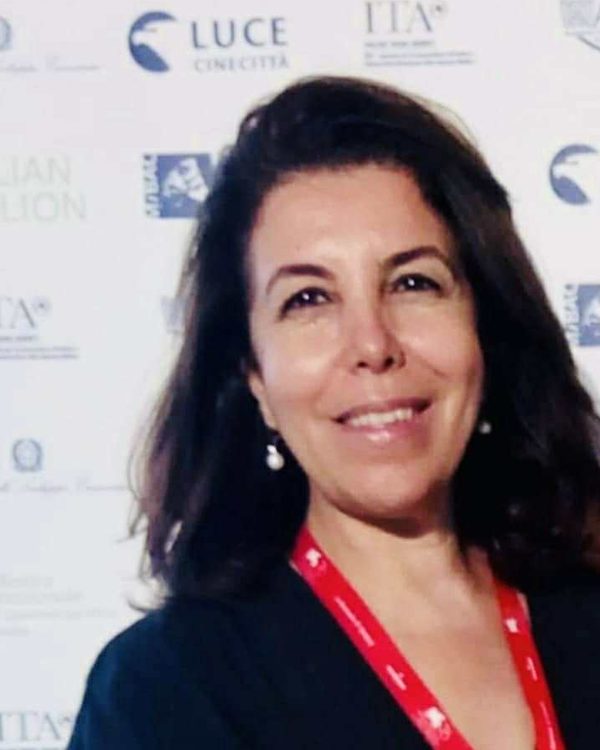


Leila Charadi
Eng
President of the Critics’ Jury
Film critic, Vice-President of AMCC · Morocco
BIOGRAPHY :
Leila Charadi is a pharmacist and film critic, and Vice-President of the Moroccan Association of Film Critics (AMCC).
She holds a PhD in Film Analysis and Aesthetics from Paris 1 Panthéon-Sorbonne University, with a thesis entitled “The Representation of Female Desire in Maghrebi Cinemas: Between the Visible and the Invisible.” Her research focuses primarily on representations of femininity and shifts in the gaze in cinema from the Maghreb and the Arab world.
She publishes articles in specialist journals, including Wachma and the Moroccan Journal of Film Research. She also contributed to the collective volume Cinema, Creation and Re-creation, published in Paris in 2018 by Les Impressions Nouvelles.
She regularly speaks at conferences and festivals in Morocco and internationally devoted to film analysis and film studies. She has also served on juries at several international festivals, including feature film juries at the Tangier National Film Festival and the Malmö Arab Film Festival, and critics’ juries at the Tétouan Mediterranean Film Festival and the Khouribga African Film Festival.
In 2019, she served on the UNIMED (Mediterranean Universities Union) jury at the 75th Venice International Film Festival.
Fr
Présidente du Jury de la Critique
Critique de cinéma, vice-présidente de l’AMCC · Maroc
BIOGRAPHIE :
Leila Charadi est pharmacienne et critique de cinéma, vice-présidente de l’Association Marocaine des Critiques de Cinéma (AMCC).
Elle est titulaire d’un doctorat en analyse et esthétique du cinéma de l’Université Paris 1 Panthéon-Sorbonne, avec une thèse intitulée « La représentation du désir féminin dans les cinémas maghrébins : entre visible et invisible ». Ses travaux portent principalement sur les représentations du féminin et les mutations du regard dans les cinémas du Maghreb et du monde arabe.
Elle publie des articles dans des revues spécialisées, notamment Wachma et la Revue marocaine des recherches cinématographiques. Elle a également contribué à l’ouvrage collectif Cinéma, création et re-création, publié à Paris en 2018 aux éditions Les Impressions Nouvelles.
Elle intervient régulièrement comme conférencière dans des colloques et festivals, au Maroc et à l’international, consacrés à l’analyse filmique et aux études cinématographiques. Elle a par ailleurs été membre de jurys dans plusieurs festivals internationaux : jurys de longs métrages au Festival national du film de Tanger et au Festival du film arabe de Malmö, ainsi que jurys de la critique au Festival du cinéma méditerranéen de Tétouan et au Festival du cinéma africain de Khouribga.
En 2019, elle a été membre du jury UNIMED (Union des Universités de la Méditerranée) lors de la 75ᵉ Mostra de Venise.
Ar
رئيسة لجنة تحكيم النقاد
ناقدة سينمائية، نائبة رئيس الجمعية المغربية لنقاد السينما · المغرب
السيرة الذاتية :
ليلى الشرادي صيدلانية وناقدة سينمائية، ونائبة رئيس الجمعية المغربية لنقاد السينما.
حاصلة على الدكتوراه في تحليل السينما وجمالياتها من جامعة باريس 1 بانتيون–السوربون، بأطروحة بعنوان: «تمثيل الرغبة الأنثوية في السينمات المغاربية: بين المرئي واللامرئي». تتمحور أبحاثها أساسًا حول تمثيلات الأنوثة وتحولات النظرة في سينمات المغرب العربي والعالم العربي.
تنشر مقالات في مجلات متخصصة، من بينها «وشمة» و«المجلة المغربية للأبحاث السينمائية». كما ساهمت في الكتاب الجماعي «السينما، الإبداع وإعادة الإبداع»، الصادر بباريس سنة 2018 عن دار «Les Impressions Nouvelles».
تشارك بانتظام بصفتها محاضرة في ندوات ومهرجانات، داخل المغرب وخارجه، تُعنى بالتحليل الفيلمي والدراسات السينمائية. كما كانت عضوًا في لجان تحكيم عدد من المهرجانات الدولية، منها لجان تحكيم الأفلام الطويلة بالمهرجان الوطني للفيلم بطنجة ومهرجان مالمو للسينما العربية، ولجان تحكيم النقد بمهرجان تطوان لسينما البحر الأبيض المتوسط ومهرجان خريبكة للسينما الإفريقية.
في سنة 2019، كانت عضوًا في لجنة تحكيم اتحاد جامعات البحر الأبيض المتوسط (UNIMED)، ضمن الدورة الخامسة والسبعين من مهرجان البندقية السينمائي.